Blackout Curtains vs. Eye Masks: Which Is Better for British Summer Nights?
It's half past ten on a Tuesday in late June. The washing-up is done, the window is open, and the sky over the rooftops is still the colour of a faded blue shirt. You know you need to be asleep in twenty minutes. Your body, sensibly enough, thinks it's still early evening.
This is the specific awkwardness of a British summer. We don't get desert heat or Nordic midsummer whites, but we do get a long, slow dusk and a sunrise that arrives far earlier than anyone asked for. Two cheap pieces of kit are usually offered as the fix: blackout curtains and an eye mask. Both are excellent. They also do quite different jobs, and knowing which one you actually need saves you money and a certain amount of fumbling in the dark.
Why our summer nights are their own problem
London doesn't get astronomically dark at all between late May and mid-July. The sun sets after nine in mid-June and there's still a glow in the north-west well past ten. Sunrise comes before five in the morning for weeks either side of midsummer. Head further north and it gets more extreme still.
Light doesn't just make it hard to fall asleep. It's the signal your body uses to decide what time it is. Bright light in the evening delays the feeling of sleepiness; bright light at four in the morning tells your brain the night is over. That's why the problem isn't only falling asleep in June — it's the 4.50am wake-up that leaves you flat by mid-afternoon.
What blackout curtains do better than anything else
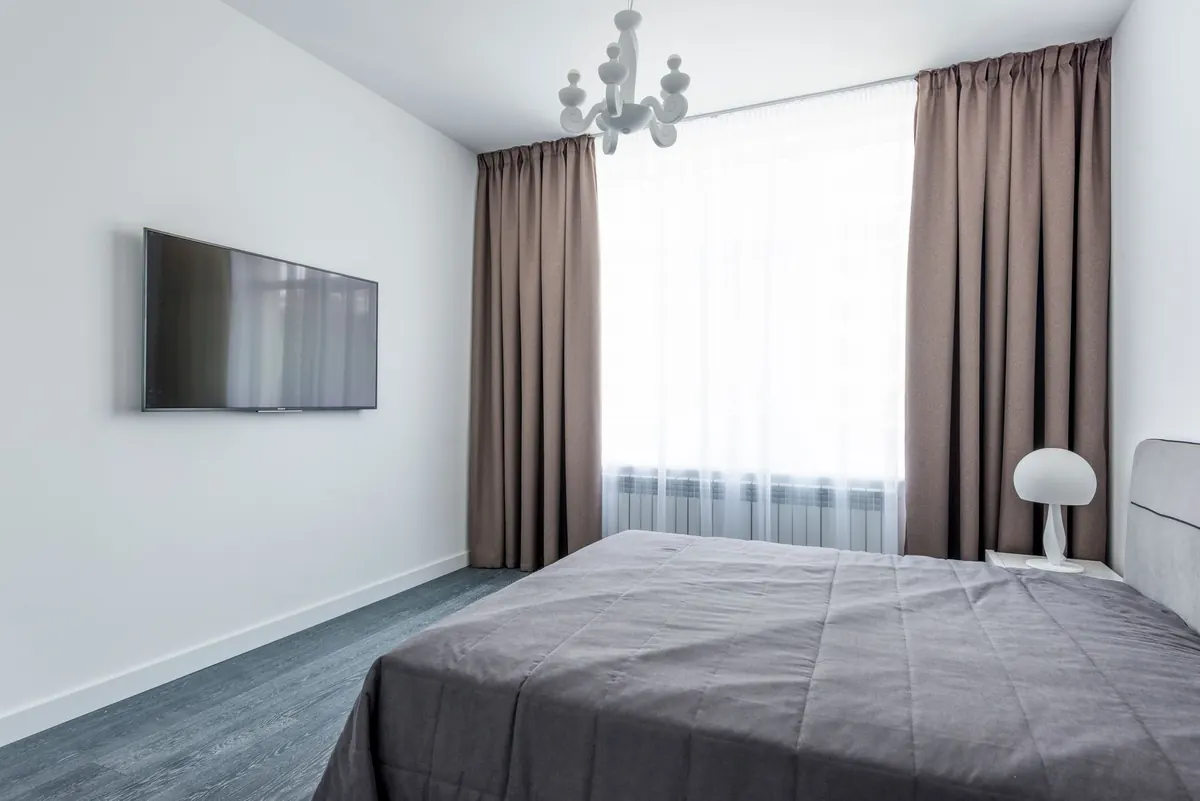
They fix the room, not just your face. If your bedroom faces east or you live above a street lamp, decent blackout curtains — or a blackout lining hung behind the curtains you already own — turn a bright room into a dim one for everyone in it, including a partner who works shifts or a baby who wakes at first light. They also cut noise slightly and keep the street light out in December, when you want to be asleep at seven in the evening.
The fitting matters more than the fabric
Most disappointing blackout curtains aren't failing because of the material. They're failing because of the gaps. Light travels, and a two-centimetre strip down the side of a curtain is enough to light up the wall beside your head.
- Hang the pole or track outside the window recess, as close to the ceiling as you can, rather than inside it.
- Extend it 15–20cm past each side of the window so the fabric can sit flat against the wall.
- Overlap the two panels at the middle, or buy one wide panel instead of a pair.
- Add side returns — hook or clip the leading edges back towards the wall — so no light escapes around the sides.
- If you can't change the hardware, fit a cheap blackout roller blind inside the recess and draw the curtains over the top of it. The two together beat either one alone.
- Check the top. Light leaking over the pole is the most common complaint; a pelmet or valance solves it.
What an eye mask does better than anything else
An eye mask is personal, portable and inexpensive compared with curtains. It works in a hotel with thin beige drapes, on a sleeper train, in a tent in the Lake District, on a friend's sofa, and in your own bed when the sun is coming up and you want another hour. It also lets you sleep with the window open, which matters in a British bedroom in July — more on that below.
For shift workers it's often the only practical answer, because you can't make a room dark at two in the afternoon without turning it into a cave.
Choosing one you won't tear off at 3am
- Moulded or cup masks leave space over your eyes, so there's less pressure on your lashes and no smudging if you wear eye cream. They suit back sleepers best.
- Flat silk masks are the lightest and the most comfortable for side sleeping, but they tend to leak a little around the nose.
- Contoured foam masks seal well and block light nicely, though they can feel warm in summer.
- Look for an adjustable strap — Velcro or a sliding buckle rather than fixed elastic. Set it so it passes below your ears, not over them, or you'll wake with a headache.
- Wash it weekly. Masks collect oil and sunscreen, and a grubby mask against your eyes is a reliable route to irritation.
If a mask leaves a bright crescent under one eye, try tightening it a notch or changing the angle of the strap before you give up on it.
The trade-offs worth knowing about
Heat. Closed blackout curtains trap warm air behind them. In a British bedroom without air conditioning, an open window is your only real cooling. A mask lets you keep the window open, run a fan and still get darkness — a genuine point in its favour during a heatwave.
Noise. Neither option blocks sound. If you sleep with the window open onto a main road, earplugs are the third piece of kit.
Mornings. Blocking every scrap of dawn light can make waking harder. Open the curtains when your alarm goes, or use a sunrise alarm so the room brightens gradually instead of staying black until you drag yourself up. Bright light soon after waking helps keep your body clock in the right place.
Sharing. Curtains serve the room; a mask serves one person. Couples often end up with both.
A practical way to decide
Start with the mask if light is only a problem for the last hour or two of your night, if you travel, if you're on shifts, or if you'd rather not spend a weekend drilling and measuring.
Go for curtains, or a blackout lining, if your room never gets properly dark, if a partner or child is affected, if you want the option of a dark room in the evening as well as the morning, or if you're tired of waking at first light every June.
If you want the best result, layer them: a blackout blind in the recess, curtains drawn over it, and a mask on the bedside table for mornings when the sun wins anyway and you've decided eight o'clock is a reasonable time to be alive.
One last thing: if you're waking repeatedly, snoring heavily, or still exhausted after a decent night, that's a conversation for your GP rather than a shopping trip. Light is only one part of the picture.
Photo: Max Vakhtbovych / Pexels